
What is V2X?
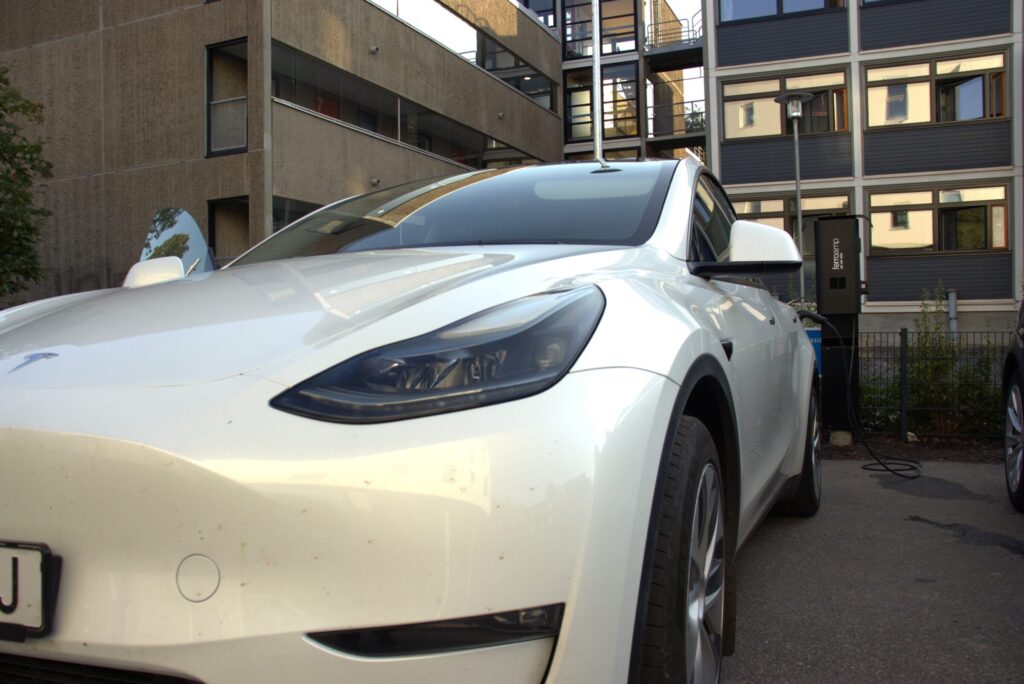
There are many different concepts that revolve around bidirectional EV charging and it can be difficult to understand which cars can actually be charged and with which chargers. Here we answer some of the most frequently asked questions.
What is the difference between V2G, V2H and V2X?
The abbreviations stand for vehicle-to-grid, vehicle-to-home, and vehicle-to-everything.
V2G stands for vehicle-to-grid and means that the electric vehicle can deliver electricity to the electricity grid. It is about being able to contribute with different types of support services via an aggregator to balance the electricity grid.
V2H stands for vehicle-to-home and means that the electric car battery is used behind the electricity meter to, for example, increase self-use of solar electricity, cut power peaks, avoid price peaks or as backup power.
V2X stands for vehicle-to-everything and is the overall concept for the use of bidirectional charging. In addition to V2G and V2H, it also includes V2L (vehicle-to-load) and V2V (vehicle-to-vehicle).
What are the different types of charging V2X charging?
Just like when charging an electric car, it can be discharged with either AC (alternating current) or DC (direct current).
AC charging
All AC charging goes via the car’s on-board charger, which converts the alternating current from the electricity grid into direct current in the electric car battery. In order for AC to be discharged, the on-board charger must be bidirectional. This adds complexity and increases the cost of the car.
There are still question marks over rules for certification and connection to the electricity grid (grid codes) when discharging with AC.
DC charging
All electric cars that have a fast charging port (CCS) have the technical prerequisites to be discharged with DC. Since DC charging does not go through the on-board charger, no special adaptation of it is required. The only requirement is that the car manufacturer has not locked the possibility of discharge. The car should also be equipped with the latest standard for communication between charger and vehicle – ISO15118-20. Discharge also works on many cars with an older standard but with some shortcomings in control.
What is ISO 15118-20?
ISO 15118-20 is the latest standard for communication between chargers and electric cars (previous variants are DIN 70121, ISO 15118-2). By using the same protocol, the charger and the car can agree on how much power and energy should be driven, how charging should be scheduled, whether to use a payment solution, etc. ISO 15118-20 contains some features that are important when discharging. For example, it allows the electric car to tell what discharge power is allowed, to what level the battery should discharge and at what time the car needs to be charged again.
Some car manufacturers have developed their own variants of ISO 15118-2 and ISO 15118-20 that only work with their own cars and their own chargers. These cars are not fully compatible with other chargers, even though they follow the same protocols.
What does it mean that a wallbox is V2G-ready?
Many modern AC wallboxes are marketed as V2G-ready. Most often, this means that the wallbox has the ISO 15118-20 communication standard and can thus communicate with electric cars that have also implemented the standard.
However, it is not certain that it will be able to discharge an electric car anyway. For it to work, it also requires:
- That the car has a bidirectional on-board charger.
- That the car supports the same variant of the standard as the charger and thus does not have its own variant that requires keys, which means that they only work with the car manufacturer’s own charging boxes.
- That the charger is on the Rikta Rätt list and is installed as a production facility with notification to the electricity network company. (applies to Sweden)
What is the difference between open and closed V2X solutions?
An open solution means that the common communication standard ISO 15118-20 is used and that a car can be discharged with any charger. A closed, or proprietary, solution means that the car only allows charging with certain chargers or that a charger can only discharge a certain car brand. Some car manufacturers have also developed their own proprietary variants of ISO 15118-20 which means that the car is not compatible with all chargers.
What type of charger is Ferroamp V2X?
Ferroamp V2X is a bidirectional DC charger that complies with ISO 15118-20. Thus, a bidirectional on-board charger is not required to discharge. However, it is required that the car’s software does not actively prevent discharge, which may be the case if the car has a proprietary variant of ISO 15118-20. Read more about Ferroamp V2X and which cars have been tested for discharge.
Ferroamp V2X
Share the insight
